York Region includes the cities of Markham, Richmond Hill, and Vaughan, the towns of Aurora, East Gwillimbury, Georgina, Newmarket, and Whitchurch-Stouffville, and the Township of King.
Total 2025 carbon emissions: 8.7 MtCO2eq
% of GTHA carbon emissions: 15%
Population (2025 estimate): 1,261,894
% of GTHA population: 16%
Land Area: 1,758 km2
2025 York Regional Insights
Overview
Total emissions increased by 9% in 2025 due to a significant rise in building emissions, reaching their highest level in over 10 years.
York Region Total Emissions, 2019-2025
Per Capita
Total per capita emissions increased by 8% in 2025, reaching 6.9 tonnes of carbon per person.
Excluding industrial and agricultural sectors, York’s per capita emissions also increased by 8%, reaching 6.8 tonnes of carbon per person.
York Region Per Capita Emissions, 2019-2025
2025 York Sector Insights
York Region 2025 Emissions by Sector
Buildings: Natural gas emissions increased by 15% due in part to a cold winter that increased the demand for gas heating. After normalizing for weather, York’s gas emissions rose 3%.
Normalized gas emissions increased for commercial buildings (up 4%), industrial buildings (up 4%), and residential single-family buildings (up 2%), whereas normalized gas emissions from residential multi-family buildings decreased by 1%.
Electricity Grid: Electricity consumption increased by 5% in 2025, York’s largest annual increase in over 10 years. Electricity-related emissions rose by 29%, continuing an upward trend driven by increasing reliance on natural gas-fired generation within Ontario’s electricity grid.
Transportation: Transportation emissions increased by 2%. After normalizing for population, transportation emissions per capita increased by 1%.
Electric vehicle registrations were up 15% (BEV) and 27% (PHEV). These represent 4% of total vehicle registrations in 2025, which is the second highest in the GTHA after Halton.
York Region Transit did not see a significant change in ridership in 2025 compared to 2024.
2025 Municipal Insights
Overview
Vaughan (3.3 megatonnes), Markham (1.8 megatonnes), and Richmond Hill (1.2 megatonnes) had the largest emission totals in 2025. Excluding agriculture and industry, per capita emissions range from a high 9.4 tonnes per person in Vaughan to a low of 4.9 tonnes per person in Aurora.
York Municipalities 2025 Emissions by Sector (tCO2eq)
Pop.
Natural Gas
Electricity
Transportation
Industry
Waste
Agriculture
Total
Aurora
66,741
159,563
43,952
109,650
0
12,539
0
325,704
East Gwillimbury
37,251
73,798
8,558
235,325
0
6,998
10,591
335,270
Georgina
51,238
87,943
30,916
258,626
0
9,626
13,243
400,354
King
29,396
83,267
14,239
156,655
0
5,523
19,556
279,240
Markham
364,052
772,457
218,353
782,014
0
68,393
5,647
1,846,864
Newmarket
94,580
204,142
55,651
246,871
0
17,768
2,383
526,815
Richmond Hill
217,270
479,099
130,480
590,118
0
40,818
0
1,240,515
Vaughan
347,490
1,090,561
342,784
1,772,669
11,076
65,282
3,883
3,286,255
Whitchurch–Stouffville
53,628
118,602
57,578
261,985
0
10,075
19,424
467,663
Buildings: The largest sources of emission in Aurora, Markham, Newmarket, and Richmond Hill are buildings followed by transportation. In East Gwillimbury, Georgina, King, and Vaughan, the order is reversed. Waste is the third largest source of emission in all cities except Georgina, King, East Gwillimbury, where agriculture represents a larger share of emissions.
Natural gas emissions increased between 14% and 23% in all York municipalities (after weather-normalization the increase was 2% to 9%).
Electricity Grid: East Gwillimbury and Georgina each saw a 2% decrease in electricity consumption. The rest of the municipalities experienced increases, with the highest occurring in King (up 9%), Richmond Hill (up 8%), and Vaughan (up 6%).
Transportation: Changes in transportation emissions varied: decreases were observed in Aurora (down 7%), East Gwillimbury (down 3%), Whitchurch-Stouffville (down 3%), and Georgina (down 2%). Increases were observed in Vaughan and Markham (up 1%), King (up 5%), Richmond Hill (up 9%) and Newmarket (up 19%).
The share of electrified vehicles (BEVs and PHEVs) among total vehicle registrations ranges from a low of 2% in Georgina to a high of 6% in Richmond Hill.
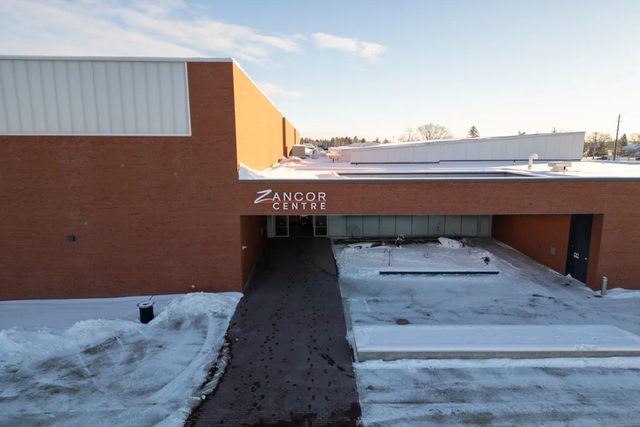
King's Zancor Centre Earns Zero Carbon Building Design Certification
King’s new Zancor Centre opened in 2025 as Canada's first combined aquatics and ice-sports facility to achieve Zero Carbon Building Design Certification by the Canada Green Building Council.
Vaughanbuildings
Vaughan Opens All-Electric Carrville Community Centre and Library
City of Vaughan recently opened the Carrville Community Centre and Library, a new all-electric community hub designed to meet the Zero Carbon Building Standard with features like rooftop solar.
York Regiontransportation
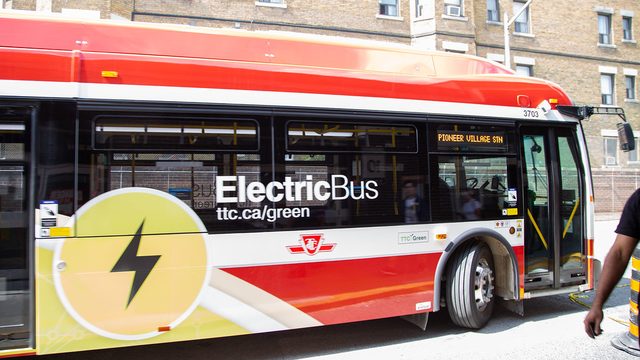
York Region Transit Adds 75 Battery-Electric Buses
York Region Transit added 75 battery-electric buses to its fleet in 2025, with another 50 slated for delivery in late 2026. Once deployed, electric buses will account for nearly a quarter of YRT's total fleet.
Richmond Hilltransportation
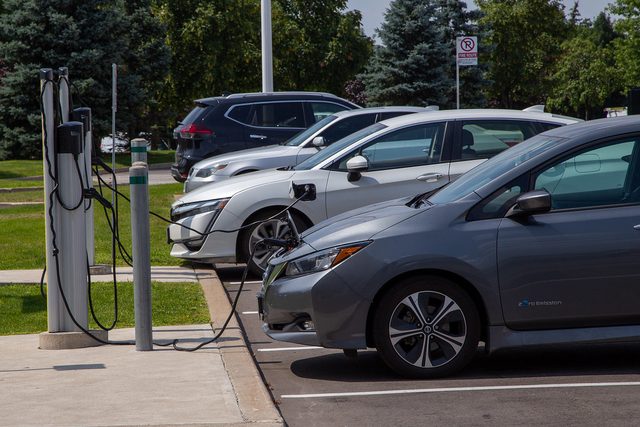
Richmond Hill Endorses Electric Vehicle Charging Strategy
In late 2025, Richmond Hill council endorsed the municipality’s Electric Vehicle Charging Strategy, which will guide the implementation of public EV charging stations at City-owned facilities, municipal buildings, parks, community centers, and libraries.
Markhambuildings
Markham District Energy Wins Global Climate Award
In 2026, Markham District Energy's wastewater energy transfer project received international recognition through the Global District Energy Climate Awards, highlighting Markham's leadership in low carbon district energy.
Newmarketbuildings
Newmarket Updates Community Energy Plan with 85% Reduction Target
Newmarket’s Community Energy Plan was updated in April 2026 with a plan to reduce community-wide emissions by 85% by 2050. Actions include municipal facility retrofits, a community heat pump incentive program, and creation of a revolving energy fund to ensure savings from retrofits are reinvested to support further retrofits.
East Gwillimburybuildings
East Gwillimbury Approves Climate Adaptation and Community Energy Plans
In 2026, East Gwillimbury Council approved the municipality's Climate Adaptation Plan and Community Energy Plan, establishing a roadmap to reduce greenhouse gas emissions, strengthen energy resilience, and prepare for climate-related risks.