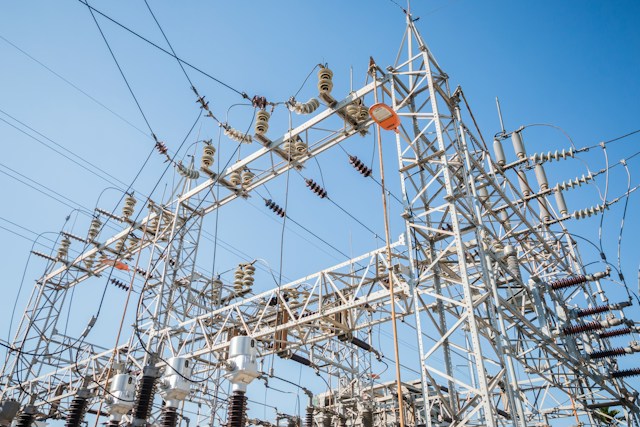
In 2025, electricity emissions in the GTHA increased by 26%.
Electricity emissions are influenced by two primary factors: electricity demand in the region and the carbon intensity of the electricity used to meet that demand.
In 2025, total electricity demand in the GTHA increased by 2.6%, from 60.3 to 61.8 terawatt hours. If the carbon intensity of the electricity grid had remained the same as in 2024, then electricity emissions would have risen by just 2.6%. However, the carbon intensity of the grid increased by 23% in 2025, reaching 88.9 gCO2eq/kWh.
This resulted in an overall 26% increase in electricity emissions.
This is a direct consequence of the province’s increasing reliance on gas-fired electricity generation, despite strong alternatives.
Electrification is still the lowest carbon, most efficient path.
Despite near-term increases in electricity emissions, electrification of transportation, buildings, and industry remains the most effective method of reducing economy-wide emissions. Using electricity even in a higher-carbon scenario is cleaner than direct combustion of fossil fuels.
Electricity Grid Intensity, 2015-2025
Ontario electricity demand is forecast to grow 65% by 2050, driven by economic development, population growth and electrification. At the same time, a supply-demand gap is expected to emerge over the coming decade, and how we decide to fill this gap will have lasting implications for electricity emissions and net-zero goals.
Forecasted ON Electricity Emissions, 2015-2050
Generated using data from IESO’s 2026 Annual Planning Outlook.
The IESO’s Capacity Expansion Scenario (“APO”) in 2026 identifies the least-cost portfolio of resources needed to meet Ontario's growing electricity demand while maintaining system reliability. Depicted above is the IESO’s reference scenario, which assumes 250 TWh of total demand by 2050. The APO also includes a low-demand scenario (207 TWh by 2050) and a high-demand scenario (297 TWh by 2050), which are not shown. TAF uses the reference scenario for electricity system modelling, as it represents the IESO’s view of the most likely trajectory under current market conditions and policy assumptions. Despite substantial differences in installed capacity, projected electricity emissions across the scenarios are markedly similar, roughly doubling by the end of the decade before declining to near-zero by 2050.
Data centres are expected to be a major contributor to the overall demand growth, accounting for an estimated 8.6% of Ontario’s electricity demand by 2050. Ensuring that data centres responsibly manage their energy use, emissions, water consumption, and grid impacts will be critical to maintaining a reliable and resilient electricity system.
Meeting Ontario's future electricity needs requires investing in the right solutions now. With proven technologies, a ready industry, market demand, and strong evidence supporting clean electricity, Ontario should prohibit new or expanded gas-fired generation and limit the use of existing gas plants. At the same time, the province must rapidly deploy cost-effective clean energy resources, including demand response and other distributed energy solutions. Proven energy efficiency and conservation should remain central to electricity planning, helping reduce demand while lowering costs and emissions.
TAF’s recent analysis of public OEB data found net-metered solar capacity in the GTHA has increased more than 40% in each of the last two years. Residential solar and storage offers a timely opportunity to tap the thousands of underused rooftops that could generate clean, predictably priced electricity where it is needed, while easing pressure on the grid and strengthening local resilience.
To help accelerate adoption across the region, TAF recently launched Home Solar Accelerator, a free, education-first concierge service designed to help GTHA homeowners understand and install rooftop solar and battery storage systems.
Ontario is making significant investments in expanding its energy efficiency programs over the next twelve years. Over a dozen programs are planned providing financial incentives for homeowners and business targeting:
18,000 GWh of electricity savings (equivalent to London + North Bay + two Ottawa-sized cities).
3,000 MW of peak demand savings by 2036 (equivalent to 70% of City of Toronto's summer peak demand).
Ontarioelectricity
IESO Releases 2025-2027 Demand-Side Management Plan
IESO released the 2025-2027 demand-side management plan that is forecasted to achieve 900 MW of peak demand savings and 4.6 TWh of electricity savings by 2027. Program details, budget breakdowns, and expected targets are included in the report.