Proven climate solutions that meet the moment.
Policy Recommendations
All Levels
Rationale for TAF recommendations
This year’s inventory makes it clear that three sectors: buildings, transportation, and the electricity system, continue to drive the majority of emissions in the region. They are also the sectors where governments can act quickly, cost-effectively, and realize benefits that extend far beyond carbon.
We focus our recommendations on these areas because they represent the GTHA’s most immediate and durable opportunities to deliver climate benefits while strengthening energy security, affordability, public health, and economic competitiveness. Buildings determine long-term energy demand and household costs. Transportation impacts air quality, mobility choices, and the resilience of our communities. The electricity system underpins every aspect of modern life, from heating and cooling to industry and digital infrastructure. When these systems perform well, residents and businesses benefit. When progress fails, costs rise and vulnerabilities deepen.
We only highlight proven solutions. These are not theoretical or dependent on speculative technologies that may or may not materialize. They are already delivering results in jurisdictions across Canada and internationally. Many are being implemented in parts of the GTHA today. What is needed now is scale, coordination, and policy alignment across all three levels of government.
Our recommendations balance impact with feasibility. The inventory provides a clear picture of the current landscape, and these recommendations represent the most practical solutions.
Municipal

Toronto zoning changes offer low-cost relief for residents facing rising energy bills
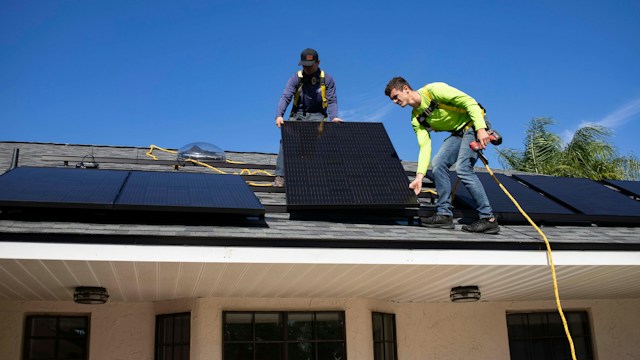
In 2026, Toronto City Council passed zoning bylaw amendments that make it easier and more affordable to adopt low carbon technologies. Previous setback rules made front yard heat pumps nearly impossible, and solar canopies in parking lots were effectively banned.
Removing these barriers helps residents manage energy costs and enables businesses to invest in long-term climate and economic resilience.
These cost-effective actions are replicable, and we encourage municipalities across the GTHA and beyond to follow Toronto’s lead.
Improve building efficiency with financing, performance tracking, and technology deployment
Buildings directly impact indoor health and comfort, household costs, and local emissions. Municipal governments can accelerate progress by improving performance tracking, enabling financing, and removing barriers to efficient, low carbon construction. These actions strengthen affordability and resilience while supporting proven solutions already working across the GTHA.
Specific Actions
- Adopt mandatory energy and water reporting and benchmarking (EWRB) requirements for large commercial, institutional, and multi-unit residential buildings.
- Develop Building Emissions Performance Standards (BEPS) and implementation support programs informed by EWRB data.
- Improve access to retrofit financing by creating or enhancing municipal loan programs such as Property Assessed Clean Energy (PACE) or Commercial (C)-PACE.
- Streamline zoning and permitting processes for prefabricated and modular housing by leveraging CSA A277 certified systems, clarifying inspections and zoning requirements, and addressing permit review inconsistencies and zoning reinterpretation.
- Advocate for a tiered, performance-based Ontario Building Code harmonized with National Model Codes.
- Provide incentives and financing to drive high-performance, low carbon design that exceeds minimum requirements.
Plan and invest to make transportation cleaner, healthier, and easier
Transportation is a major source of emissions and shapes affordability, access to jobs, and air quality in the GTHA. Municipal planning and investment can accelerate the shift to cleaner, more efficient travel by removing barriers to EV charging, improving transit service, and supporting community development centred around sustainable transportation choices.
Specific Actions
- Review and update municipal bylaws and parking rules to enable the installation of EV charging infrastructure.
- Eliminate minimum parking requirements and implement parking reforms to support transit-oriented communities.
- Establish or improve minimum 24/7 frequency and reliability of service standards for transit.
Remove local barriers to clean electrification and distributed energy resources
The electricity system is the backbone of clean electrification across the GTHA. Local policies play a role in enabling residents and businesses to access and benefit from clean energy. By updating zoning, improving permitting, and working closely with utilities, municipalities can unlock distributed energy resources and strengthen the resilience of the system.
Specific Actions
- Modernize zoning bylaws, definitions, and permitting processes to support low carbon energy and electrification technologies, including heat pumps, solar installations, energy storage, and EV charging infrastructure.
- Take advantage of available federal clean energy incentives, including the Clean Electricity Investment Tax Credits to support municipal clean energy projects.
- Deploy engaging public communications and education to help residents and business owners understand and access electrification programs and incentives already in place.
- Engage with Local Distribution Company staff to explore how municipal assets and communications can be leveraged to support the deployment and use of distributed energy resources, including non-wires and eDSM solutions.
Provincial
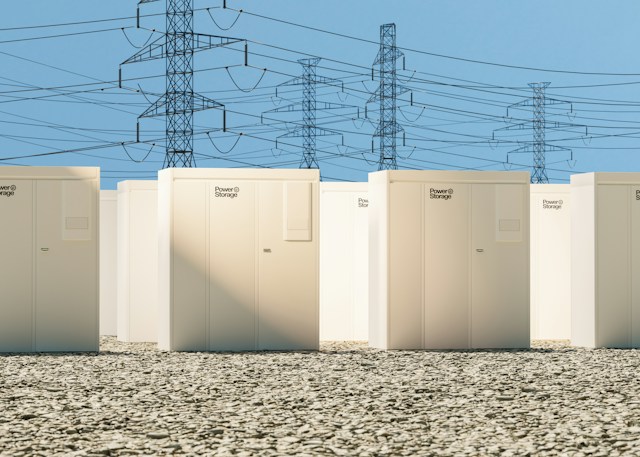
Battery storage outperforms natural gas in Ontario’s energy auction
Ontario procured a record amount of battery storage in 2026. 640 MW of new battery storage was secured across three projects, each with at least 50% Indigenous ownership. The province called it the “lowest-cost capacity procurement in Ontario’s history.”
Modernize Ontario's building and energy policy framework to support low carbon, electric-ready communities
Stronger provincial policy is essential to prepare Ontario’s buildings for a low carbon future. Updated codes, scalable financing, and support for district energy can reduce emissions, lower energy costs, and improve reliability. These actions provide clarity for industry and support solutions already proven in Ontario and beyond.
Specific Actions
- Update Ontario’s Building Code by June 2027 to harmonize with the National Model Codes, and adopt Energy Efficiency Tier 2 of the National Energy Code for Buildings and Tier 4 of the National Building Code.
- Establish a robust provincial C-PACE framework to mobilize private capital for building retrofits, electrification, renewable energy, and high-performance new construction through a standardized, scalable financing program.
- Establish a district energy enabling fund to support implementation-ready projects and the decarbonization of existing systems.
- Expand conservation and demand management programs for new construction, including the automatic enrollment of all new homes with smart thermostats in Peak Perks.
Expand access to electric vehicles and sustainable transportation options
How Ontarians move affects air quality, affordability, and the economy. By enabling EV-ready homes, modernizing zoning, and expanding incentives for electric vehicles and active transportation, the province can make clean mobility a practical choice for more households and businesses.
Specific Actions
- Require 100% EV-ready parking in all new residential buildings, and at least 25% for non-residential parking to avoid costly future retrofits.
- Allow “as of right” zoning of six to 11 storeys with no minimum parking requirements on any streets serviced by frequent public transit (including bus and streetcar routes) and established major transit station areas.
- Renew multi-year funding for Ontario’s Electric Vehicle ChargeON Program and expand it to include a stream for resident parking spaces at multi-family buildings.
- Provide purchase incentives, tax credits, and rebates to support the adoption of electric vehicles, e-bikes, and related charging infrastructure across household, commercial, and heavy-duty transportation sectors.
- Support smart, congestion-reducing active transportation infrastructure.
Prioritize development of clean utility-scale and local electricity supply while fully leveraging demand-side resources
Ontario’s electricity system must evolve to reduce emissions and strengthen energy security. Today, the province relies heavily on natural gas imported via the United States, exposing households and businesses to price volatility and geopolitical risk. Prioritizing clean, local supply and fully leveraging demand-side resources can improve reliability, lower long-term costs, and support a resilient energy future.
Specific Actions
- Direct the IESO to prioritize least-cost electricity procurement, including transparent valuation of the cost and benefits of non-emitting resources.
- Extend Community Net-Metering (O. Reg 679/21) province-wide and allow for models that enable community ownership and benefits, and Indigenous participation.
- Remove barriers limiting renewable generation, including by: increasing the microgeneration threshold from 12 kW to at least 20 kW; amending O. Reg 350/12 to reduce setback requirements that restrict ground-mounted solar installations; and ending the offshore wind ‘moratorium.’
- Direct the IESO to accelerate deployment of the $10.9 billion allocated for electricity Demand Side Management, including by allowing local distribution companies to develop programs that benefit distribution and bulk systems and that support efficient new construction.
- Develop a regulatory framework for new data centres that mandates responsible energy planning, municipal engagement, reporting requirements, and stimulates investment into grid reliability and efficient technologies including demand response, energy storage, load flexibility, waste heat utilization, and integrated water efficiency.
Federal
EV Incentives Reinstated
In early 2026, the federal government reinstated the EV Affordability Program, offering incentives up to $5,000 to increase adoption of electric vehicles. The drop in sales that ensued when the program was paused in 2025 highlights the key role of incentives in driving near-term growth in EV adoption.
Statistics Canada reported that sales in the first four months of 2026 rose by 20.8% compared to the same period in 2025.

Ensure new buildings are efficient and affordable to operate through stronger codes, sustained retrofit investment, and support for innovative new construction
Federal leadership is essential to accelerate efficient buildings across Canada. Stronger national codes, sustained retrofit investment, and support for innovative construction can reduce emissions, lower energy costs, and build long-term energy security. Clear federal direction helps provinces, municipalities, and industry scale proven solutions already delivering results.
Specific Actions
- In addition to the recently announced rebates for heat pumps, expand access to affordable financing for home energy efficiency, electrification, and deep retrofit projects.
- Strengthen the 2030 National Model Code requirements for low carbon, resilient buildings by:
- Committing to retiring lower greenhouse gas performance tiers over time;
- Introducing embodied carbon requirements;
- Requiring 100% Electric Vehicle Service Equipment (EVSE) readiness (also known as a “rough-in” requirement) in new residential construction;
- Ensuring all parking spaces are equipped to support future EV charging; and
- Introducing solar-ready requirements for new buildings so on-site renewables, such as photovoltaic (PV) systems, can be easily integrated.
- Require federally funded housing projects through Build Canada Homes and other federal housing initiatives to meet at least Tier 4 of the National Energy Code for Buildings or Tier 5 (net zero ready) of the National Building Code, leveraging modern methods of construction, including prefabrication, mass timber and modular building systems, to achieve high performance, accelerate delivery, and preserve housing affordability.
- Pass Amendment 19 of the Energy Efficiency Regulations to strengthen minimum energy efficiency standards for major home appliances, water heaters, air conditioners, and electric motors, while avoiding unnecessary delays to compliance timelines that postpone energy savings and emissions reductions.
Support vehicle electrification through regulation, funding, and infrastructure
The federal government is uniquely positioned to support the electrification of transportation. Introducing strong tailpipe emissions standards, enabling import of cleaner vehicles from Asian and European markets, and supporting charging infrastructure with incentives would signal policy certainty for consumers and industry.
Specific Actions
- Introduce emissions standards for light duty vehicles that ensure at least 75% EV sales by 2035 and 90% by 2040.
- Restart federal consultations on the Medium- and Heavy-Duty Electric Vehicle Standard.
- Allow the import and sale of EU-certified vehicles and continue to reduce tariff restrictions on Chinese-made EVs.
- Provide municipalities with stable, long-term transit funding with requirements for design and operation that encourage housing and jobs near major transit stations.
- Provide incentives for EV charging infrastructure, including comprehensive EV-ready retrofits in multi-family buildings.
Support households and businesses to deploy home solar, battery and other distributed energy resources
Distributed energy resources like home solar and batteries give households and businesses more control over their energy use while reducing dependence on imported American natural gas. Powering Canada Strong energy investments should be paired with local implementation and delivery capacity programs that help residents and businesses adopt electrification. With targeted federal investment, communities across Canada can adopt clean technologies that improve affordability, reliability, and long-term energy security.
Specific Actions
- Facilitate the deployment of residential rooftop solar and storage capacity through easily accessible loans, supported by concierge-style programs that educate homeowners and provide them with independent advice and guidance.
- Align energy efficiency standards for mechanical equipment and appliances with leading international standards and best-in-class jurisdictions.
Corporate and Community Recommendations
Private Sector
The private sector plays a unique and influential role in climate action that is distinct and complementary to government approaches. Businesses can show corporate responsibility by decarbonizing their enterprise, and leadership by calling for strong climate action.
Recommendations for GTHA corporate and industry stakeholders
Understand your corporate footprint
Measure and understand your Scope 1, 2 and 3 emissions and identify your largest sources of carbon. Identify and prioritize actions that help to reduce emissions and deliver savings, like energy efficiency in buildings or in your company's fleet and travel.
Invest in decarbonization opportunities
Consider energy efficiency your ‘first fuel’, and where electrification and distributed energy resources like solar and battery storage can improve operations. Tap into numerous existing incentives, investment tax credits and technical support programs available. Also consider where decarbonization goals can help drive innovation, new supplier networks or process improvements.
Participate in policy development
Get involved in government consultations and advocate for fair policies that reduce carbon and deliver value. Encourage awareness and leadership in your industry. If you and/or your suppliers are encountering regulatory barriers at the municipal, provincial, or federal level we want to hear from you. E-mail policy@taf.ca
Residents and Organizations
The campaign against expanding Billy Bishop Airport showed how civic engagement can influence government decisions.
Residents and community groups organized campaigns, raised public awareness, and pressed elected officials to consider concerns about noise, pollution, and environmental impacts. They helped shape the debate and ultimately influenced the federal government’s decision not to back the expansion proposal.

Raise it.
Climate-related issues come up in many neighbourhood settings like libraries, hobby groups, schoolyards, BIAs, residents and tenants' associations.
Bring up climate change and climate events and ask others what they think and feel about the issues.
Participate.
Follow key municipal programs and your local utilities to find out how you can participate in key democratic processes like deputations, letters, and surveys.
Follow the Environmental Registry of Ontario and the Canada Gazette to participate in provincial and federal consultations.
Contact your local councilor, Member of Provincial Parliament, or Member of Parliament when you see an issue they can act on.
Stay informed.
Through our newsletter and LinkedIn, TAF regularly posts engagement opportunities. We also help translate what matters for urban climate issues, crunch numbers where we can, and share what our experts recommend.
Follow TAF and other organizations you trust to learn about proven approaches and points of connection.